All posts
2026-09-17
You Are Not Bad at Coping: Sleep Disruption Is a Real Perimenopause Symptom
Waking at 3 AM isn't a mindset problem — it's physiology. Why perimenopause sleep disruption is real, and what helps.
2026-09-17
Waking at 3 AM isn't a mindset problem — it's physiology. Why perimenopause sleep disruption is real, and what helps.
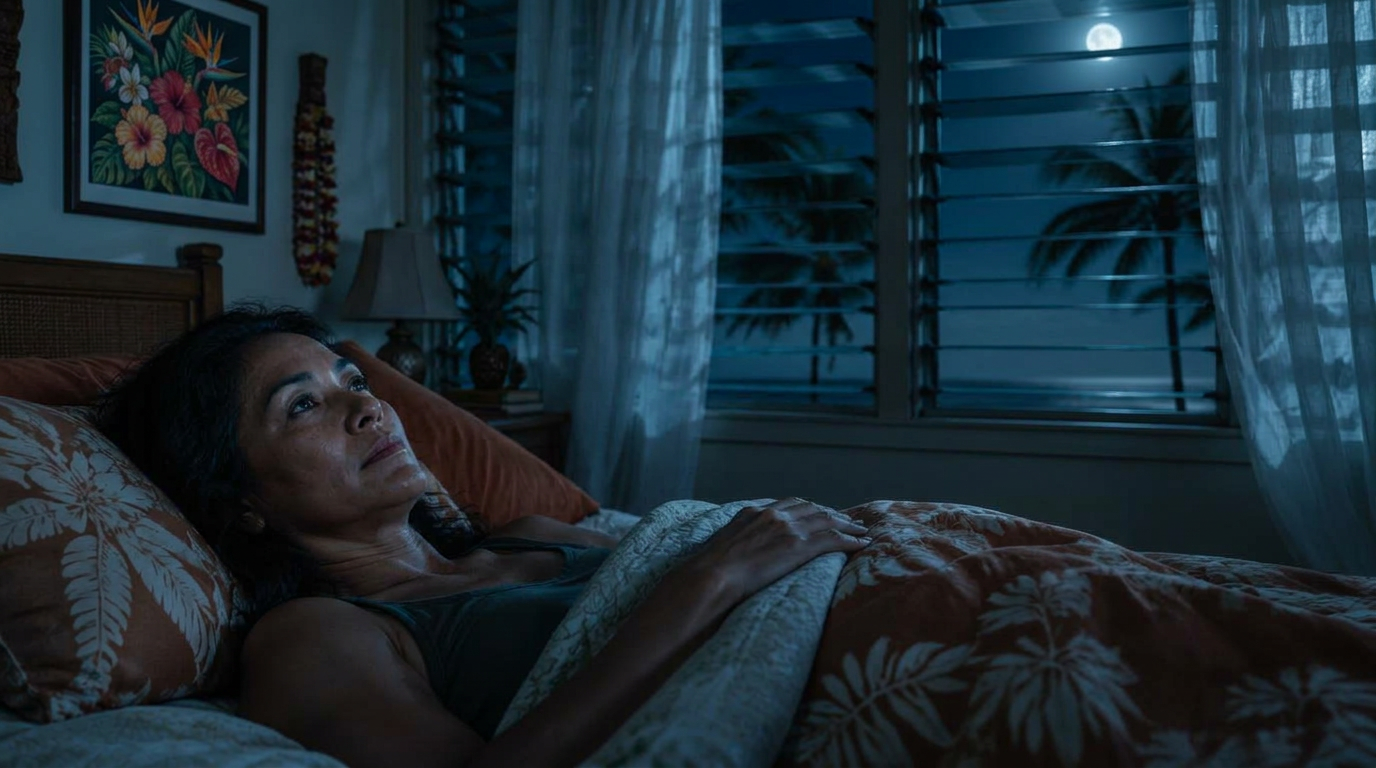
If you've been staring at your bedroom ceiling at 3:00 AM in Honolulu, wishing for the trade winds to come back while your mind races, you are far from alone.
It is easy to internalize sleep loss as a personal failure—telling yourself you're just overly stressed, not working out enough, managing your day poorly, or suddenly "bad at coping." But here is the grounding truth: perimenopause sleep disruption is a legitimate, physiological symptom, not a mindset issue.
During perimenopause, erratic shifts in estrogen and progesterone directly alter your sleep architecture long before your periods officially stop:
Living in warm climates like Hawaii can amplify these temperature shifts, making a cool sleep environment even harder to maintain.
You don't have to navigate this transition in isolation or guess your way through sleep hygiene strategies that no longer work.
Join local experts, wellness leaders, and a community of women at Second Summer, Honolulu's premier perimenopause community event. We are remapping midlife health through evidence-backed medical insights, lifestyle strategies, and compassionate connection.
At Second Summer, you will explore:
Stop blaming yourself for biological changes. Step into a space built to support your body, your health, and your rest.
By Gliss Wellness